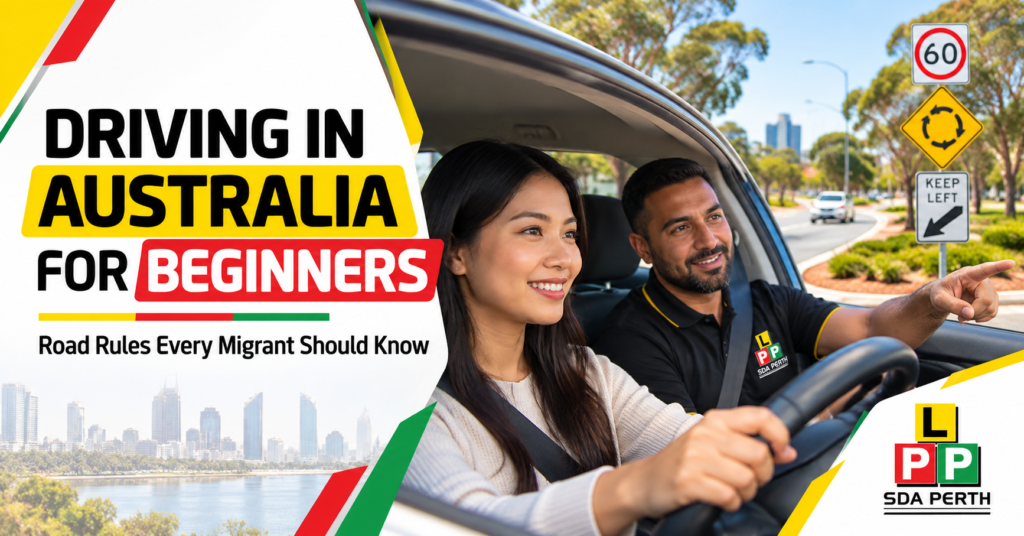
Moving to Perth can mean learning a new way of driving, even if you have held a driver’s licence for years. You might be familiar with driving in your home country, but Australian road rules, roundabouts, speed limits and traffic signs can take some getting used to.
For new migrants, international students and overseas drivers, understanding these differences is important for both safety and confidence.
This guide to driving in Australia for beginners covers the essential road rules you should know when driving in Perth, Western Australia. You will learn which side of the road to use, how to approach roundabouts, how speed limits work, and what to check before getting behind the wheel.
Although the focus is on Perth, many of these rules apply across Western Australia. Always follow the current road rules and official guidance for your circumstances.
1. Drive on the Left Side of the Road
One of the biggest adjustments for drivers arriving from countries where traffic keeps to the right is learning to drive on the left.
In Australia, vehicles generally travel on the left side of the road. The driver’s seat is normally on the right side of the car.
This affects more than steering. You also need to get comfortable with your position on the road, the location of the indicators and wipers, and the direction in which you check traffic at intersections.
Tips for overseas drivers:
- Keep to the left unless road markings or signs direct you otherwise.
- Take extra care when turning into a new road, particularly at quiet intersections.
- Check which lane you need before approaching an intersection or roundabout.
- Practise with a qualified instructor if you are unfamiliar with right-hand-drive vehicles.
Avoid rushing into busy traffic until you feel comfortable with the vehicle and local driving conventions.
2. Understand Australian Speed Limits
Speed limits in Western Australia are displayed in kilometres per hour (km/h), not miles per hour.
You will encounter different limits on residential streets, main roads, highways and roads passing through school zones. The posted speed limit is the maximum permitted under the applicable conditions, not a target you must always reach.
For example, a road signed at 60 km/h does not mean you should travel at that speed if traffic, poor visibility or roadworks make a lower speed necessary.
Remember to:
- Check signs when entering a new road or speed zone.
- Reduce speed when approaching hazards, roadworks and heavy traffic.
- Watch for variable speed-limit signs.
- Pay attention to school-zone signs and the times displayed on them.
Never assume that a road has the same speed limit as the previous street. Signs and road conditions should guide your decisions.
Official guidance is available from Main Roads Western Australia and the WA Government’s road safety resources.
3. Learn How Roundabouts Work
Roundabouts are common throughout Perth. They can be confusing if you are used to different intersection designs or rules.
Under WA road rules, drivers entering a roundabout must give way to vehicles already in the roundabout. You should also watch for pedestrians, cyclists and other road users.
Before entering a roundabout
- Slow down as you approach.
- Check road signs and lane markings.
- Give way to traffic already circulating.
- Choose the correct lane for your intended exit.
- Enter only when there is a safe gap.
Signalling at roundabouts
Signal left when exiting a roundabout, where practicable. When turning left or right, or travelling straight ahead, follow the applicable signalling rules and any lane markings.
Do not change lanes unexpectedly while circulating. Check your surroundings and remain in your chosen lane unless it is safe and permitted to move.
A useful tip: Practise roundabouts with an instructor before navigating unfamiliar, multi-lane intersections during busy traffic periods.
For official information, read the WA road rules and driving guidance.
4. Know When to Give Way
Understanding who has priority is essential when driving in Australia for beginners. At intersections, the rules depend on traffic signs, signals, road markings and the type of intersection.
Here are some important situations to understand.
- Stop signs: Stop completely at the stop line, then proceed only when it is safe and permitted.
- Give Way signs: Slow down and give way to traffic as required. Stop if necessary.
- Uncontrolled intersections: At an intersection without traffic lights or give-way controls, you generally must give way to vehicles on your right and pedestrians crossing the road.
- Turning across traffic: When turning right, you may need to give way to oncoming vehicles travelling straight ahead or turning left.
- Pedestrian crossings: Watch for pedestrians and obey the applicable crossing rules and signals.
Never assume you have priority simply because you are travelling straight. Read the signs, check the road markings and assess the traffic around you.
You can find more details in the WA Government’s guide to red lights, intersections and pedestrian crossings.
5. Wear Seatbelts and Understand Child Restraint Rules
Seatbelts are a basic part of safe driving in Australia. Drivers and passengers must comply with WA’s seatbelt requirements.
Before starting a journey:
- Make sure everyone is wearing a properly fitted seatbelt.
- Check that passengers are seated correctly.
- Ensure children use an appropriate child restraint or booster seat for their age, size and circumstances.
- Never carry more passengers than there are approved seating positions.
If you are travelling with children, check the current WA requirements rather than relying on the rules in your home country. Australian child restraint requirements may differ from what you are used to.
For additional guidance, consult the Road Safety Commission.
6. Understand Mobile Phone Rules
Using a mobile phone while driving can distract you from hazards, pedestrians and changing traffic conditions.
WA has strict rules around mobile phone use while driving. The requirements differ according to factors such as whether you are driving, stopped in traffic or parked legally, and whether you hold a full or learner licence.
As a safe habit, set your navigation before leaving, silence unnecessary notifications and keep your phone out of reach while driving.
Do not assume that holding a phone briefly at a traffic light is permitted. Check the current rules through the WA Government’s road rules guidance.
7. Know the Rules for Keeping Left and Changing Lanes
Driving on the left is only part of the picture. You also need to understand lane discipline on multi-lane roads.
On roads with a speed limit of 90 km/h or more, you must generally keep to the left unless an exception applies. The same rule applies where a Keep Left Unless Overtaking sign is displayed.
Exceptions include situations where you are overtaking, turning right, avoiding an obstruction or where the left lane is congested.
When changing lanes:
- Check your mirrors.
- Check your blind spot.
- Signal your intention.
- Make sure there is a safe gap.
- Move smoothly without forcing another driver to brake or change direction.
On Perth’s busy roads, such as the Mitchell Freeway and Kwinana Freeway, planning your lane changes early can make driving less stressful.
8. Watch Out for School Zones and Pedestrians
School zones need particular attention because children may cross roads or move unpredictably near schools.
Always check the signs for the applicable speed limit and operating times. Slow down as required and remain alert for children, crossing supervisors, parked cars and vehicles stopping to drop off or collect students.
You should also watch carefully for pedestrians near shopping areas, bus stops, residential streets and pedestrian crossings.
Never assume a pedestrian has seen you. Be prepared to slow down or stop when required by the road rules and traffic conditions.
For more information, see the official WA school zones guidance.
Western Australian Government
9. Check Your Licence Before Driving in Perth
Before getting behind the wheel, make sure you are legally permitted to drive in WA.
If you are visiting Western Australia or staying temporarily for study or work, you can generally drive using a current and valid overseas licence, subject to the relevant conditions. Carry your licence and an accepted English translation if required.
If you are moving to WA to live and are an Australian citizen or permanent resident, you can generally use your current overseas licence for up to three months before you must apply to transfer it to a WA licence. After that period, you cannot continue driving on the overseas licence under this arrangement.
Your licence must be valid, and you must comply with its conditions. You should also check whether your licence category permits you to drive the vehicle you intend to use.
Start with the official Transport WA guide for people visiting or moving to WA.
10. Common Driving Mistakes Migrants Should Avoid
Even experienced overseas drivers can need time to adjust to Australian traffic conditions.
Watch out for these common mistakes:
- Assuming road rules are identical: Similar-looking signs and intersections can have different rules.
- Entering roundabouts too quickly: Slow down, select the correct lane and give way to vehicles already circulating.
- Forgetting blind-spot checks: Mirrors alone do not show everything around your vehicle.
- Misjudging speed limits: Always check signs, especially when entering school zones or moving between different types of roads.
- Following too closely: Leave enough space to react safely if the vehicle ahead slows or stops.
- Driving while distracted: Avoid using your phone or adjusting navigation while moving.
- Rushing in unfamiliar areas: Allow extra travel time so you can concentrate on the road rather than worrying about being late.
The best approach is to build good habits from the beginning. You do not need to learn every road in Perth at once. Start with familiar routes and gradually develop your confidence.
11. A Pre-Drive Checklist for New Drivers in Perth
Before every journey, take a moment to check the following:
- My driver’s licence is current and valid for driving in WA.
- Everyone is wearing a seatbelt.
- My mirrors and seat are adjusted correctly.
- My phone is put away and navigation is set.
- I understand the route and likely road conditions.
- I know the applicable speed limits.
- I am alert, rested and fit to drive.
- The vehicle is safe to use.
These simple checks can help you develop a consistent routine and reduce avoidable distractions.
Frequently Asked Questions
1. Is driving in Australia difficult for beginners?
It can take time to adjust, particularly if you come from a country where people drive on the right. Learning local road rules, practising roundabouts and becoming familiar with Australian traffic signs can make the transition easier.
2. Can I drive in Perth with my overseas licence?
Generally, yes, if you are visiting or staying temporarily and your licence is current and valid, subject to applicable conditions. Australian citizens and permanent residents moving to WA generally have three months to apply to transfer their overseas licence. Check the official rules for your circumstances.
3. What side of the road do Australians drive on?
Australians drive on the left side of the road. Most cars also have the driver’s seat on the right-hand side.
4. Are the road rules the same throughout Australia?
Many road rules are similar across Australia, but some requirements and enforcement arrangements differ between states and territories. If you are driving in WA, follow the applicable Western Australian rules.
5. Do migrants need driving lessons in Perth?
Driving lessons are not compulsory for every overseas licence holder. However, lessons can help you become familiar with local road rules, improve your driving confidence and identify habits that need adjustment.
6. How can I learn Perth road rules before driving?
Start with the official Drive Safe handbook, study the Road Safety Commission’s guidance and practise with a qualified instructor if you need help applying the rules on the road.
Build Your Driving Confidence with Sumit Driving Academy
Moving to a new country comes with plenty of adjustments, and driving is no exception. Understanding local road rules is an important first step towards feeling more comfortable behind the wheel.
At Sumit Driving Academy, we help learners in Perth develop their driving skills through practical lessons suited to their experience and needs. Whether you are new to Australian roads or want to improve your confidence before driving independently, structured practice can help you identify areas for improvement.
Ready to become more confident on Perth roads?
Visit Sumit Driving Academy to explore driving lessons and discuss the right starting point for your experience.